Google’s developer keynote just laid down the blueprint for the next phase of software development with Antigravity 2.0 and WebMCP.
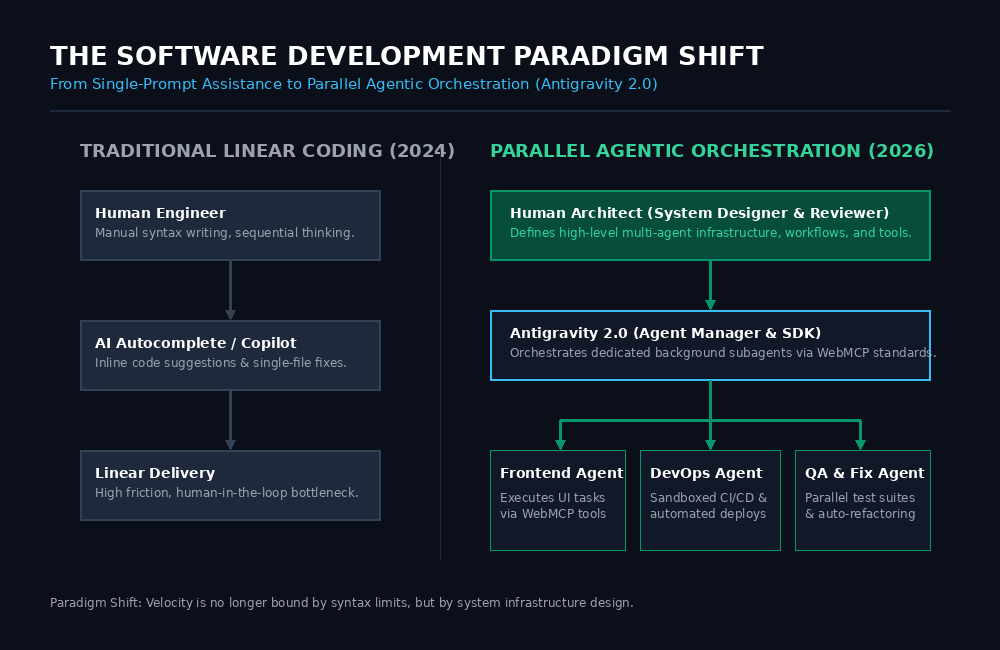
We are moving fast from simple inline code completion to autonomous, parallel agent orchestration.
For software companies, technical founders, and engineering leaders, this rewrites the delivery playbook in three major ways:
1. Erasing the Migration Bottleneck:
Google previewed a migration agent in Android Studio that ports legacy setups (like React Native or iOS) into clean, native Kotlin code. It turns what used to be multi-week, high-friction technical debt into a localized task handled in hours.
2. Standardizing Agent Interaction (WebMCP):
WebMCP is introducing an open web standard that allows web apps to expose structured tools (JavaScript functions and HTML forms) directly to browser-based AI agents. Instead of brittle web scraping, agents can execute complex, cross-platform tasks natively and accurately.
3. Sandboxed Parallel Execution:
Antigravity 2.0 unbundled from a simple IDE extension into a dedicated ecosystem featuring a standalone agent manager, CLI, and SDK. You can spin up specialized subagents in parallel (DevOps, QA, Frontend) protected by built-in credential masking and hardened Git policies.
The Architecture Reality Check:
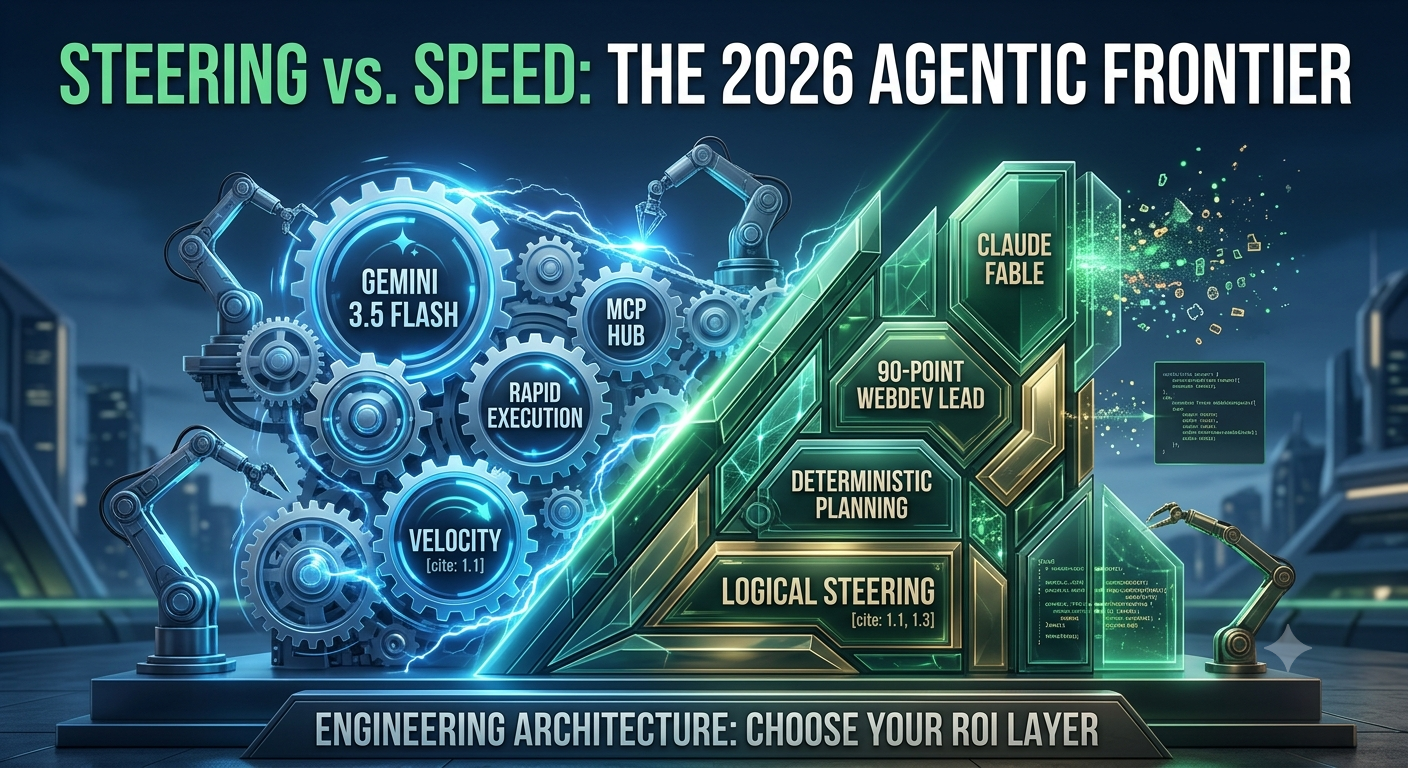
With models like Gemini 3.5 Flash smashing benchmarks on multi-step tool use (hitting 83.6% on MCP Atlas), model intelligence is no longer your engineering bottleneck. Your bottleneck is your system design.
Our roles as tech leaders are fundamentally shifting. We are moving away from reviewing code syntax and moving toward being System Architects and Integrity Reviewers.
Your team's shipping velocity is now entirely determined by how cleanly you design your multi-agent infrastructure and state synchronization.
Are you preparing your internal codebases for agentic tool-use, or are you still viewing AI as just a smarter autocomplete?
Let's discuss in the comments.
Visit us to know more about our services www.skillihire.com
#SoftwareEngineering #VibeCoding #GoogleAntigravity #CTO #AIDevelopment #TechInnovation #MultiAgentSystems