Custom AI software development Australia refers to designing, engineering, and deploying bespoke artificial intelligence systems tailored to an enterprise's proprietary operational workflows and data. Unlike generic tools, custom AI software integrates directly with legacy enterprise architecture, maintains compliance with the Privacy Act 1988, and ensures data residency within domestic Australian data centres.
Key takeaways
- Strategic alignment: Custom AI software targets high-value operational bottlenecks that generic SaaS tools cannot resolve.
- Data sovereignty: Local deployment strategies protect intellectual property and satisfy Australian privacy and compliance mandates.
- Total cost of ownership: High initial capital expenditure is offset by zero per-seat licensing fees and sustained operational efficiency gains.
- Risk mitigation: Robust MLOps and evaluation frameworks prevent model hallucination and ensure reliable enterprise output.
What is custom AI software development for Australian enterprises?
Custom AI software development involves building software applications where machine learning models, large language models (LLMs), or decision engines form the core logic layer. Rather than relying on rigid, pre-packaged software, organisations build bespoke systems to solve domain-specific problems.
For enterprise leaders in Australia, this approach solves two core structural challenges: system integration and data control. Off-the-shelf AI productivity tools operate in isolated environments, making it difficult to connect them securely to internal enterprise resource planning (ERP) platforms, custom databases, or proprietary operational pipelines.
Custom engineering enables organisations to apply advanced techniques—such as Retrieval-Augmented Generation (RAG), fine-tuned domain models, and autonomous multi-agent systems—directly onto existing infrastructure. This creates defensible intellectual property while maintaining total oversight over data flows.
When should you build custom AI versus buying off-the-shelf?
Deciding between off-the-shelf software and bespoke development requires evaluating business criticality, data sensitivity, and operational complexity. Standard administrative tasks suit off-the-shelf tools, whereas core business processes generally demand tailored software.
| Evaluation Criteria | Off-the-Shelf AI Software | Custom AI Software Development |
|---|---|---|
| Data Privacy & Governance | Data often processed in shared public clouds; limited audit visibility. | Full data isolation; hosted in sovereign Australian cloud environments (AWS Sydney/Melbourne). |
| Operational Fit | Standardised workflows; requires team to adapt to software limits. | Built around existing enterprise processes and unique business logic. |
| Integration | Limited to pre-built webhooks and basic API connections. | Deep direct integration with custom databases, legacy ERPs, and internal microservices. |
| Intellectual Property | No defensible tech moat created; shared functionality with competitors. | Full ownership of custom source code, model weights, and pipeline logic. |
| Cost Structure | Subscription fees that scale linearly with user count. | Initial capital investment followed by predictable infrastructure running costs. |
Off-the-shelf AI solutions offer rapid setup for generic tasks like draft copywriting or basic meeting summarisation. However, when an enterprise process involves strict regulatory compliance, complex business rules, or proprietary datasets, purchasing a subscription creates operational risk and long-term cost escalation.
How much does AI software development Australia cost?
Investing in AI software development Australia typically ranges from $60,000 for a targeted proof-of-concept to over $400,000 for complex enterprise systems. Estimating total investment depends on five primary architectural and operational variables.
Scope and functional complexity
A simple interface connecting a commercial LLM API to internal documents requires less engineering effort than a multi-agent system executing real-time logistics routing. Complexity scales rapidly when adding autonomous decision-making or real-time data streaming.
Data readiness and pipeline engineering
Data preparation often represents 30% to 50% of the initial project budget. Enterprise data is frequently scattered across disparate legacy systems, unstructured formats, or unindexed document stores. Building robust data ingestion, cleaning, and vectorisation pipelines is essential before model execution.
Infrastructure and inference costs
Ongoing operational expenditure includes cloud compute, vector database hosting, and LLM API costs. Custom AI architecture optimizes these running costs by selecting smaller, specialized models or fine-tuned open-source frameworks rather than relying exclusively on frontier API models.
Governance, safety, and guardrails
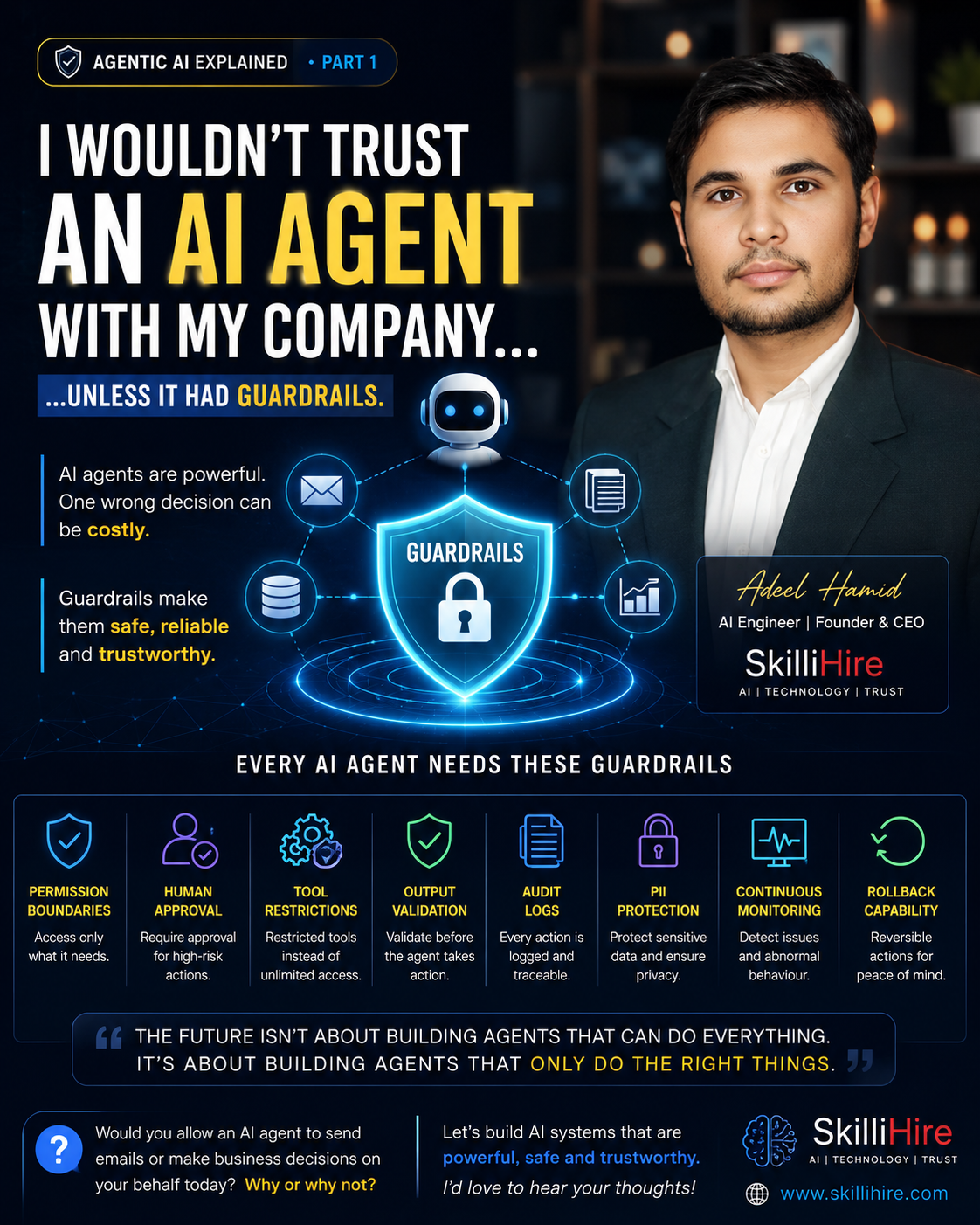
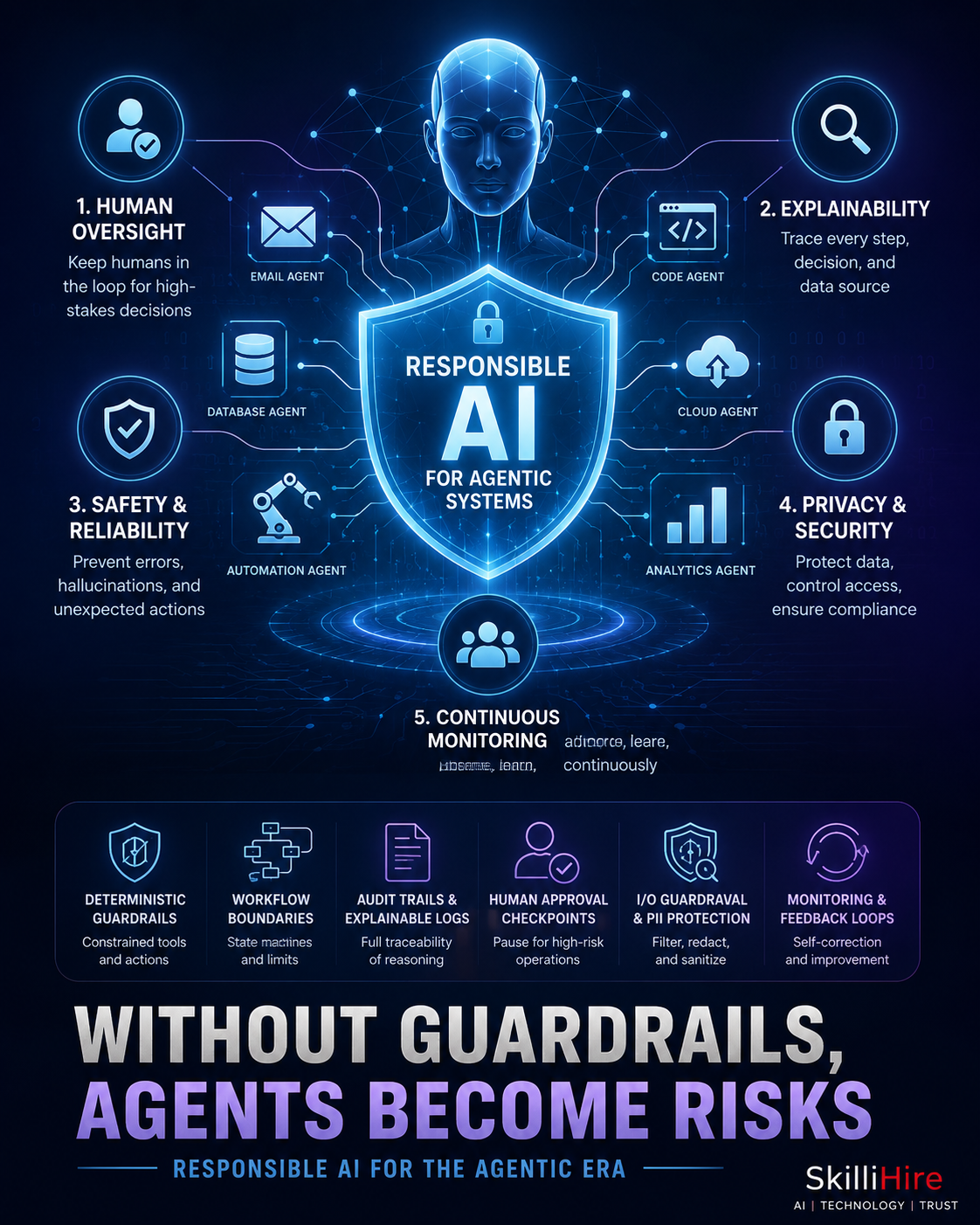
Enterprise AI systems require safety layers to intercept inaccurate outputs, enforce role-based access control, and log all decision outputs for compliance auditing. These safety guardrails add upfront development time but protect against reputational and regulatory failure.
What regulatory and compliance standards apply in Australia?
Building enterprise software in Australia requires adherence to local legal frameworks governing data privacy, cybersecurity, and operational risk.
Privacy Act 1988 and Australian Privacy Principles
Any custom AI application handling personal information must comply with the Privacy Act 1988 and the 13 Australian Privacy Principles (APPs). Key requirements include ensuring transparent notifications regarding data usage, establishing strict access boundaries, and preventing internal datasets from being used to train third-party public models without explicit consent.
Data residency and sovereignty
Government agencies, healthcare organizations, and financial service providers often require data to remain within Australian geographical boundaries. Custom AI engineering allows deployment within domestic cloud regions (such as AWS ap-southeast-2 in Sydney or ap-southeast-4 in Melbourne), ensuring operational traffic does not route through international nodes.
Sector-specific compliance
Depending on your industry, specific frameworks must inform software architecture. For instance, testing laboratories and technical institutions must consider data verification patterns aligned with NATA guidelines, while educational tools must address ACARA framework parameters. Establishing compliance at the data architecture stage avoids costly re-engineering later.
What is the enterprise AI development roadmap?
Executing custom AI software development requires a structured engineering approach to manage technical risk and prove business value at each phase.
Phase 1: Discovery & Technical Scoping
   │
   ▼
Phase 2: Data Pipeline & Architecture Design
   │
   ▼
Phase 3: Proof of Concept & Evaluation
   │
   ▼
Phase 4: Full-Stack Integration & UI Engineering
   │
   ▼
Phase 5: Production Deployment & MLOps
Phase 1: Discovery and technical scoping
Define the core business metric to improve, such as reducing processing time per transaction or increasing analytical throughput. Identify target user roles, security constraints, and integration touchpoints.
Phase 2: Data pipeline and architecture design
Map internal data flows. Engineer security controls, select embedding models, and establish the vector indexing strategies required to supply contextual data to the system reliably.
Phase 3: Proof of concept and evaluation
Build a minimal operational prototype to test accuracy, response latency, and operational performance. Establish automated benchmark evaluations to score system output against ground-truth dataset standards.
Phase 4: Full-stack integration and UI engineering
Incorporate model endpoints into custom front-end interfaces or integrate directly into existing internal tools via microservice APIs. Ensure non-technical operational teams can interact effortlessly with the underlying AI models.
Phase 5: Production deployment and MLOps
Deploy the application using automated continuous integration and continuous delivery (CI/CD) pipelines. Implement continuous monitoring tools to track latency, token utilization, user feedback, and model performance over time.
Frequently asked questions
What is custom AI software development Australia?
Custom AI software development Australia involves engineering bespoke software solutions tailored to an enterprise's specific business logic, security requirements, and systems architecture. Built locally, these systems adhere to Australian data privacy laws and host data within domestic cloud infrastructure.
How much does custom AI software development cost in Australia?
Production-ready custom AI applications in Australia typically range from $60,000 for specialized proof-of-concept tools to upwards of $400,000 for complex enterprise platforms. Costs depend on data pipeline requirements, workflow integration, model complexity, and safety guardrails.
How do Australian privacy laws affect custom AI development?
Custom AI platforms must comply with the Privacy Act 1988 and Australian Privacy Principles. Development teams must engineer system architectures that maintain strict user consent management, enforce access controls, and ensure sensitive operational data is not leaked into third-party public training sets.
How long does it take to deploy a custom AI solution?
Targeted custom AI software projects typically take 8 to 16 weeks from initial technical scoping to production deployment. Highly complex enterprise systems featuring multiple agent workflows and deep legacy system integrations can take 6 months or longer.
Why choose a local Australian venture builder over offshore outsourcing?
Working with an Australian AI partner ensures clear alignment on local regulatory requirements, immediate time-zone collaboration, and high engineering quality. Local partners understand domestic market dynamics and deliver secure, enterprise-ready software architecture.
Build your custom AI capability
Developing custom AI software gives your organisation total control over its technical stack, operational efficiency, and intellectual property. Navigating model selection, security frameworks, and system integration requires practical enterprise engineering experience.
To discuss your project requirements and scope your enterprise build, connect with our engineering team at SkilliHire Contact.